Please Note: Critical discussion, a variety of views and dialogue is encouraged. However, comments that are bullying and belittling in nature will be deleted. Regardless of your opinion or position regarding the Brahma Kumaris, please communicate with respect and kindness.
Shift II - A Heart-Based Think Tank
What is The Shift? You could say that Shift is a grassroots movement or a spiritual Think Tank made up of Raja Yogis who have learned knowledge, disciplines, and practices through the Brahma Kumaris path. These Raja Yogis are experimenting with how to implement the learned spiritual endeavours, in ways that are increasingly meaningful, non-religious and transformative in their lives. This experiment, the meetings and conversations, and the non-hierarchical support structure that is driving them is The Shift
What is The Shift? You could say that Shift is a grassroots movement or a spiritual Think Tank made up of Raja Yogis who have learned knowledge, disciplines, and practices through the Brahma Kumaris path. These Raja Yogis are experimenting with how to implement the learned spiritual endeavours, in ways that are increasingly meaningful, non-religious and transformative in their lives. This experiment, the meetings and conversations, and the non-hierarchical support structure that is driving them is The Shift.
Some BK Raja Yogis have found that the organization as it currently exists, does not support spiritual illumination outside a particular Hinduistic and hierarchical structure. So, they gather together outside the centre structure. They love all the spiritual systems, so continue their lives as Raja Yogis outside the structure offered by the Brahma Kumaris organization and management system, which they feel hinders their awakening. This is not to denigrate or criticise the centre system. It is more like feeling grateful for something that was beautiful and is honoured but is now outdated and no longer relevant.
Some Raja Yogis have been getting together for decades in Australia outside the centre structure, and it was never called Shift. It was just friends getting together in a supportive way outside the religiosity of BK centre structure. There is no membership or enrolment for The Shift. The Shift is just an acknowledgement that Raja Yogis who have been taught by the past elders within the Brahma Kumaris are in a new phase of spiritual awakening. So, in a way Shift is nothing more than a way of acknowledging another phase in the yagya community. There have been many: from the foundation years,
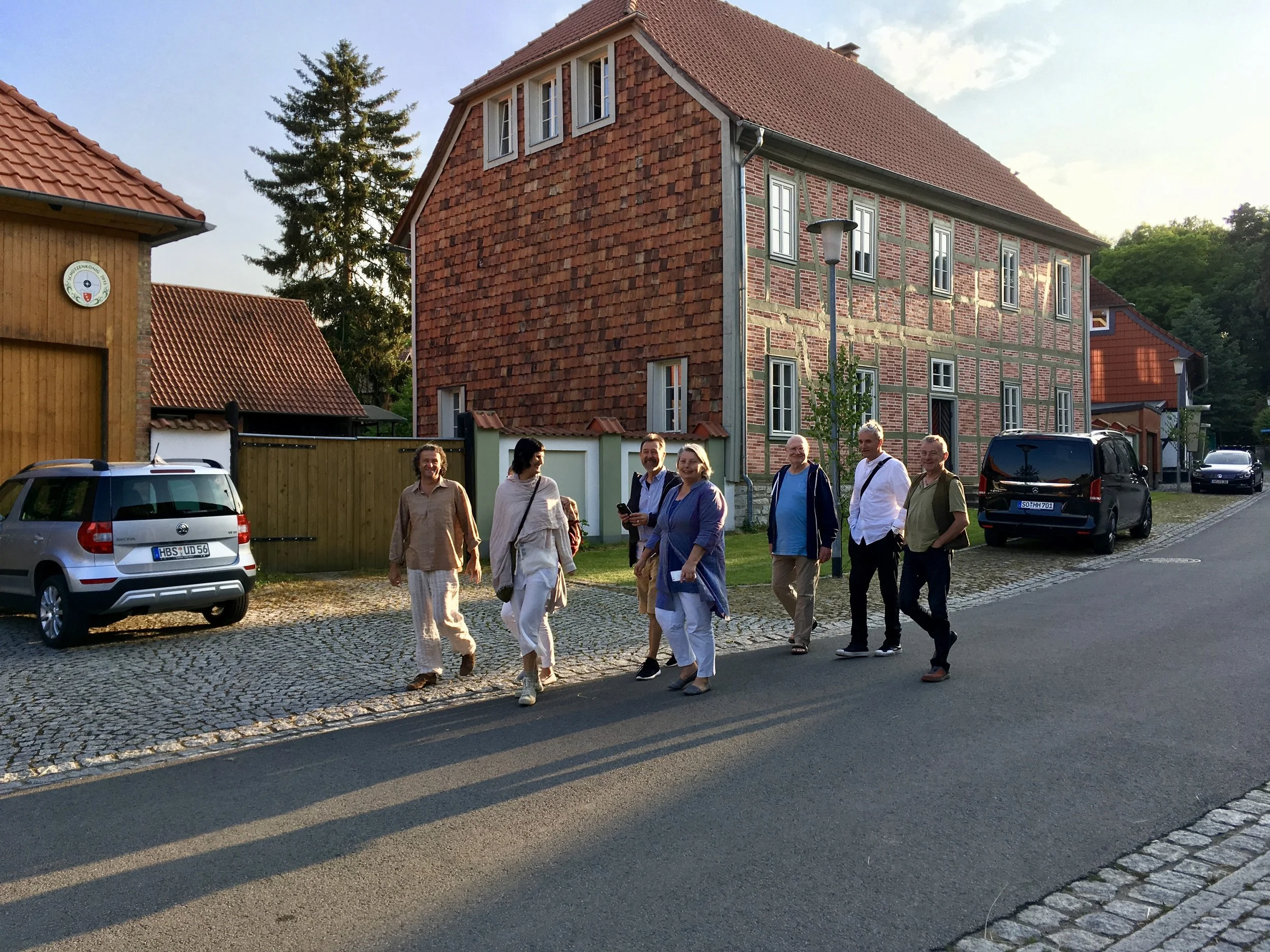
In June of this year, a group of Raja Yogis came together in a spirit of openness and spirituality, in Schauen, East Germany. Together the participants have written a Shift II report to share with everyone. You can find the long report here, the summary here, and more about the ongoing BK Community Research here. These are published in the spirit of friendliness and collaboration. Please use them in this spirit.

The Evolution of Knowledge is Now
When researching the Brahma Kumaris history, it becomes easy to think of the evolution of knowledge, as something that occurred in the remote past. Indeed the knowledge was in a state of great flux between 1932 and 1964. However, there have been further refinements since then.
When researching the Brahma Kumaris history, it becomes easy to think of the evolution of knowledge, as something that occurred in the remote past. Indeed the knowledge was in a state of great flux between 1932 and 1964. However, there have been further refinements since then.
For example, in the 1980s when many "double foreign" BKs were "born," there was a lot of focus on three stages of meditation: Brahma-Puri (the subtle form), Vishnu-Puri (the perfect form) and Shankar-Puri (the complete and bodiless form). This was a regular type of spiritual endeavour, and common discussion during classes. This has evolved and changed to the point where today meditation is a largely private and individually negotiated affair, although still conducted collectively. Sharing meditation experiences also used to be common practice after a Yoga Bhatti (period of extended meditation). This is far less frequent now. Instead, traditions from the past are pulled forward into new generations of spiritual practitioners who find new ways to bring meaning into their spiritual practice. A process of re-traditionalising perhaps?
There was a period in the late nineties through to around 2010 when there was a lot of focus on the Five Forms (Golden Age, Worship-Worthy, Brahmin, Angel, Point) and drills. These are less talked about now. Today, there is a more secular feel while BKs discuss "authenticity" and "community". Brahma-Puri, Vishnu-Puri and Shankar-Puri are now rarely talked about now. History continues to be made. The community continues to move. And knowledge continues to evolve.

The French Revolution
For the first time in Brahma Kumaris history, there is a country without leaders, where teams are appointed by common vote, and each vote counts as equal. The Brahma Kumaris in France have become a democracy! This is a radical change for the Brahma Kumaris organisation, but one that is welcome as many BKs are seeking a more integrated and less cloistered life.
Background
the new autonomy of centres
The Brahma Kumaris has never been a democracy. Considering its ancient social and cultural roots, this is no surprise. Rather it operates as a top-down hierarchy or some would say akin to a family, where elders are naturally obeyed and respected. In keeping with this cultural ideal, the current structure operates so that seniors appoint juniors. This is a logical progression from its earliest years. It is believed that Brahma was appointed by the Divine to establish the Brahma Kumaris. Brahma Baba appointed others, and these ranks were respected and understood as divine appointments. The senior Dadis were appointed by Baba and they remain in position. The Dadis have appointed those beneath them, and so on and so forth through to regional, national, local and centre level.
The relationship between Madhuban (Brahma Kumaris Headquarters in India) and overseas centres has changed considerably over the past few years, bringing legal and financial change to the organisation throughout the world. To the best of my knowledge this is what happened...
Within the last 10 years ago, the taxation laws in India changed. Every centre in the world connected to Madhuban would have to pay tax to the Indian government, which would be a financial burden for many centres. Subsequent to this law change, Madhuban cut fiscal ties to international centres creating a new kind of independence. The relationship between Madhuban and overseas is still social, cultural and devotional. These deep and lasting ties are based on shared understanding, a relationship of mutual care, and a common vision for global change. However, with financial and legal autonomy comes the possibility for social change. The Brahma Kumaris in France was the first one to realise this change in a politically significant way.
Brahma Kumaris in France have recently structured a new kind of leadership, that is novel within the organisation. This is quite a radical change for the Brahma Kumaris organisation, but one that is welcome as many BKs are seeking a more integrated and less cloistered life which also reflects a true living spirituality.
France has sent us their Statutes and By-Laws which you can read here.
Before you read it, please take note of the following which was shared by Brother Francois from France.
- France has many who are spiritually very mature, which means a new governance was required.
- This has been a three year work involving many.
- The idea was to be open and not restricted, to make it friendly and inclusive.
- This has been created from the ideal of respect-ocracy rather than demo-cracy.
- It is a sample to learn from, not THE reference.
- It is a French document adapted to the political situation of France.
- This is not the new shrimat (prescriptive directions) of the western yagya (Brahma Kumaris)
Many thanks to Eric from Montreal and Francois from Paris for your trust, and for sharing these with us.

The Shift
There is a sense of movement and change within the Brahma Kumaris organisation. Some are concerned, and some are inspired. Some feel it's the most natural thing in the world, and some are worried because centre attendance has dropped in countries outside of India. Service in India is expanding rapidly. Service in countries outside of India has slowed. Like a tree, branches die and leaves fall off, the trunk strengthens, and new branches form. The tree changes its form, shape, size and vigour according to the season, according to the time, and according to the environment in which the seed was planted. Many have the question of what is going on?
There is a sense of movement and change within the Brahma Kumaris organisation. Some are concerned, and some are inspired. Some feel it's the most natural thing in the world, and some are worried because centre attendance has dropped in countries outside of India. Service in India is expanding rapidly. Service in countries outside of India has slowed. Like a tree, branches die and leaves fall off, the trunk strengthens, and new branches form. The tree changes its form, shape, size and vigour according to the season, according to the time, and according to the environment in which the seed was planted. Many have the question of what is going on? For a few years now - perhaps five or so - BKs have been discussing the yagya amongst themselves; In formal meetings, and informal gatherings, at the highest level of hierarchy, and among the most rudimentary and grassroots level.
A yagya is a sacrificial fire that is created to stimulate change. A yagya is established to dispel bad omens and to invite good ones. It is dynamic and without clear boundaries. A yagya is powerful and transformative. A yagya is fire, and fire is the great element of change. Whatever is offered into a yagya, is transformed through the element of fire. Similarly, this yagya, our yagya, was never designed to be a static organisation. The yagya is a living boundless phenomenon in which many things exist, including the Brahma Kumaris organisation. The Brahma Kumaris exist in various countries. It is often known by a different name and different structure, according to the laws and requirements of the country. However, distinct from this is the the all encompassing fire of spiritual energy: the yagya which stimulates self and world change. Considering all of this, the collapse of the Brahma Kumaris in its current form, within the transformative/ destructive/ creative energy of the yagya, is the most natural thing in the world. A group met in Germany this year, to discuss this very thing. Sister Denise also spoke about it recently. We would love to hear your comments on the matter.

Robes and Regalia
When we see someone in flowing robes, a wild head-dress or wearing some kind of religious regalia, there is a sense that we are seeing someone who is different to us. Their lives are distinguished by their dedication to spiritual practice. Their dress also symbolizes a degree of social non-conformity. Perhaps there are higher rules that they abide by. Are there? Do they have greater ideals?
When we see someone in flowing robes, a wild head-dress or wearing some kind of religious regalia, there is a sense that we are seeing someone who is different to us. Their lives are distinguished by their dedication to spiritual practice. Their dress also symbolizes a degree of social non-conformity. Perhaps there are higher rules that they abide by. Are there? Do they have greater ideals? Their robes/ headdress/ regalia may also tell us something about their history. Asian, Chinese, cultish, Indian, monk-like, Christian, Middle-Eastern. Dress, while the most superficial of coverings, indicates many things. It tells a story about the wearer.
White clothes in India have always been a sign of simplicity and purity. They are typically worn during times of fasting and mourning: Widows traditionally wear white saris. Simple, white khadi (cotton) was promoted by Gandhi as the true fabric of India that formed part of the greater social fabric of the Subcontinent. For a woman to wear a white sari symbolizes her respect for tradition, is an act of modesty and grace, and is a sign of her being a "good Indian woman". The feminine form holds great meaning in India. Shakti, the ultimate divine feminine power. The goddesses: Lakshmi, Durga, Santosh, Kali. The responsibility of upholding the sanctity of India, traditionally and historically rests largely with the feminine. And so in society, is held by the woman.
In the Brahma Kumaris, wearing a white sari is a symbol of purity, aligns the wearer with the loves and respected first generation, and with the greater history of virtue and tradition in old India. It is hallmark of being a teacher. After being a practicing Brahma Kumaris for over 15 years, I practiced wearing a sari more frequently in India. As an indication of respect more than anything else. I had to get up ten minutes earlier to wrap myself in 6 meters of cloth, count my pleats, check the length of my tail/ wing, pin through the starched cotton forcefully enough to penetrate multiple layers of starched cotton and gently enough to not stab myself. It was quite a bothersome task. Every morning I would ask myself why I was doing it. But every morning I did it anyway. After a few days of consistent wearing, an Indian brother with a super pleased smile on his face came up to me and said "Oh sister, it is so good! Now you have become FULL Brahma Kumari!"
In the BK teachings, there is no indication that one should wear any kind of clothing in particular. In today's teachings, it was written:
"Children, by all means, stay at home with your family. Who says that you have to change clothes etc? Wear whatever you want! You have to come into connection with many. There are no objections to your wearing coloured clothes. You can wear whatever clothes you want; that has nothing to do with it. The Father says: Renounce the consciousness of the body and all bodily relations. You can wear whatever you want. Simply consider yourself to be a soul and remember the Father."
Nevertheless, wearing a white sari is still a meaningful practice for many. And so the tradition continues.

Predictions and Theology
There has been some discussion within the Brahma Kumaris about 'predictions' in the teachings and whether a date for a cataclysmic world change was ever explicitly given, implied or even insinuated.
Predictions
There has been some discussion within the Brahma Kumaris about 'predictions' in the teachings and whether a date for a cataclysmic world change was ever explicitly given, implied or even insinuated.
Anthony Strano, one of the most senior teachers in the west, and held in particularly high regard as a someone who practiced the teachings at the deepest level, had this to say about dates mentioned in the BK scripture:
"Time is contrived by 'man' (sic) to make sense out of the world. Similarly God uses the instruments of human creation to bring meaning to His (sic) teachings. But it's really not about dates. It never has been. It's about whatever you want to do, do it now."
Often, with scriptural texts, a sense of spiritual urgency is measured against world events producing predictions that - frequently - 'fail' to come to pass. This is often the case with Millenarian New Religious Movements as well as older more established religions. This doesn't have to mean that the teachings themselves have failed, but rather it may require some revised thinking around the 'absoluteness' of scriptural text. In this case, it is worth considering hermeneutics, or the language of analysis and interpretation of scripture. Hermeneutics dates back to the Jewish Oral Tradition but since the time of Aristotle (Risser 1997) it has been a method of engaging critically with scriptural text and acknowledging the fluid nature of scriptural interpretation.
“God has not revealed his theology all at once. Rather, God has revealed Brahma Kumaris theology gradually and in response to his assessment of the Brahma Kumaris’ needs and ability to understand. Their theology is not sealed and their canon is not closed. It grows continually as God explains and elaborates on it. Tomorrow, God may personally resolve any contradictions that appear today.”
Theology
Within the Brahma Kumaris theology, some murlis have been revised over the years, to remove predicted dates of 'vinash' or catastrophic world change that have not yet come to pass. See here for an example from 21.01.1969 three days after Brahma Baba passed away. The original and the revised versions are included, with the relevant text outlined in red. More examples of predictive statements in murlis are available below. Note that some have links to original documents, whereas others have yet to be verified.
As stated in Musselwhite's doctoral dissertation on the Brahma Kumaris, "God’s teachings regarding the end of the Diamond Age have not been entirely consistent. The most senior member I heard speak on the subject suggested that the Diamond Age will last either 100 or 250 years." (Page 5).

The need for history and research
As with all religious movements, there is a clear ideal and core body of knowledge established among the founder and first generation. As time goes by, recollections of these often take the form of stories that tell of great virtue and strength against remarkable adversity and hardship. The Brahma Kumaris is no different, no less than the Church, and the story of origin of this curious organization, is compelling.
This morning I was reading a book by David Hulme, the editor of the journal 'Vision', called 'Apostles: First Followers and Their Faith (Vision Media Publishing, 2010)'. The following is an excerpt from the foreword of the book, that made me reflect on some discussions that are currently taking place within the Brahma Kumaris about changes within the organization. Hulmes comments are in italics. My comments follow.
By the first part of the second century, (the early New Testament Church that had grown so quickly in numbers and spiritual strength in the first century), had all but disappeared in the historical record… it was as if a great curtain came down on the Church… When the curtain began to rise again 20 years later, the church that emerged was very different from the body the apostles had nurtured.
As with all religious movements, there is a clear ideal and core body of knowledge established among the founder and first generation. As time goes by, recollections of these often take the form of stories that tell of great virtue and strength against remarkable adversity and hardship. The Brahma Kumaris is no different, no less than the Church, and the story of origin of this curious organization, is compelling.
Since the passing of Dadi Prakashmani (1922-2007) who was widely considered an exemplar who lead the organization through decades of global expansion with grace, love, courage and humility, things have changed. The change has been acknowledged at all levels of the organization, and various attempts have been made to manage it. The challenge faced by everyone within the organization to some degree is to welcome the expansion while returning to the vision and ideals of practice, taught by the founder.
An attempt at this was Global Functioning. In 2007, the same year that Dadi Prakashmani passed, Global Functioning was established as an initiative to "review(ing) the needs of the Brahma Kumaris worldwide to assure that, with the expansion of the family and the growing complexity in these times, we have the right kinds of guidance available to BK center coordinators, main instruments (living at or supporting the centers,) and regular students... We want to assure that we have credible processes in place for applying our principles in the accurate running of the global organization in alignment with the laws and human rights conventions of the 21st century world and with our own Divine Constitution and other foundation documents. We are considering ways in which our guiding principles need to be updated to meet the demands of these changing times and of the expanded family." (Workbook for Moving Our Global Functioning Forward, 2008)
For the last seven years, there have been more committees, boards, groups, teams and levels of administration added than in the entire 75 years before that. Informal conversations among many indicate there is a concern at the increasing departure within the organization from the feeling of belonging, commitment, vision, love and practice of the ‘early days’. This ‘problem’ is not unique of course to the Brahma Kumaris. I return to David Hulme who speaks of the writings within the Christian Church, and whose reflections are relevant to the Brahma Kumaris:
Much of what has been written has come from authors who have filtered their conclusions through the traditions and teachings of a church farther and farther removed from the earliest believers… Few have labored to fully understand the teachings and practice of the first followers in their first-century cultural setting and their deep connection to the Hebrew Scriptures.
In a similar vein, there seems to be an attempt to modernize the Brahma Kumaris and to adapt and adjust to suit the needs of the world; To become legitimate, more new age, and more eclectically spiritual than spiritually revolutionary. The earliest Brahma Kumaris teachings were steeped in Hindu bhakti culture and broadly contextualized within understandings of the Shrimad Bhagawad Gita. The principles and lifestyle were influenced and effected by Hindu/ Muslim/ Sikh cultures who were each geographically and ideologically significant to the community. Yet, as with all religions, the path is held as an ideal of purity, as beyond influence, as above culture, as greater than tradition.
I believe a time has where we need to explore history and conduct research from within the organization, in a way that is self-inquiring rather that self-affirming, in a way that is self-explorative rather than self-congratulatory. This would be an exceptional act of humility and grace.
Perhaps it is time to offer a fresh perspective on a generation who really did provide timeless teachings. A perspective that acknowledges the heart of the teachings, while understanding that the teachings are profoundly influenced by tradition and exceedingly shaped by culture. A perspective that has the courage to look deeply within.
Adi Dev
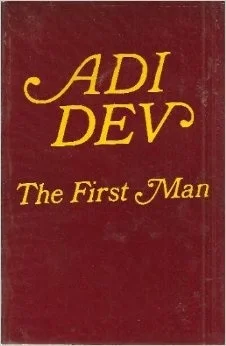
Since its printing, Adi Dev has become a story of inspiration for many. The exciting and revolutionary tale of young girls and women against the forces of tradition and patriarchal hierarchy is one that continues to move many.
In Adi Dev Jagdish artfully weaves together two key elements for the reader: the old social history and the new spiritual knowledge that took almost 30 years to become clear. The dilemma with any historical account, particularly one that is so deeply romantic and mythical in its proportions and sense-making, is its 'accuracy'.
Respected Jagdish Chander Hassija (1929-1997) was a senior brother and one of the most prolific and articulate writers of the Brahma Kumaris World Spiritual University. Adi Dev was perhaps his most seminal work in terms of its influence and significance in the lives of many students of the Brahma Kumaris or "BKs". Written in the 1970s in the authors native Hindi and then later translated and printed in English, Adi Dev chronicles the story of the founder and the early community, along with providing the essence of knowledge that is now the foundation of all Brahma Kumaris work worldwide.
Since its printing, Adi Dev has become a story of inspiration for many. The exciting and revolutionary tale of young girls and women against the forces of tradition and patriarchal hierarchy is one that continues to move many.
In Adi Dev Jagdish artfully weaves together two key elements for the reader: the old social history and the new spiritual knowledge that took almost 30 years to become clear. The dilemma with any historical account, particularly one that is so deeply romantic and mythical in its proportions and sense-making, is its 'accuracy'.
In light of original documents re-discovered in 2007 by a couple of dedicated BKs, it became clear that some of the events, interpretations and even timeline given in Adi Dev was simplified and adjusted to create a much neater theological package, rather than the messy one that more rightly represents how the knowledge developed, and the way events occurred.
I am being intentionally careful with my language as all those who knew Jagdish, including myself, hold him in great esteem. I believe his intention was noble. Jagdish bhai wrote Adi Dev at a particular time and place in history, with a specific focus and intention: The Brahma Kumaris was expanding internationally and a concise historical account was required to provide an unseen global population an overview of BK spiritual philosophy, as well as an account of how it came to be. In the late 1970s, no thought was given to the possibility that - almost forty years later - original documents would show a complex, revolutionary series of narratives interlaced with instances of social rebellion in the context of thickly embedded politics and a convoluted legal system. One thing that is clear and true in Adi Dev is that the spiritual journey of and fierce independence of early members directly threatened thousands of years of culture, class, tradition and family.
The main pretext of Adi Dev is that the knowledge developed simply and quickly as a result of clear spiritual insights experienced by the founder, Dada Lekhraj (now known as Brahma Baba). This is in contrast to what we now understand: The knowledge came as a series of awakenings with little understanding to accompany them. Spiritual insights were reviewed, and sense-making occurred in light of the Bhagawad Gita, the key spiritual scriptures of that community. Furthermore, the knowledge was co-discovered. Dada would have insights that would then be fleshed out through the young girls' visionary trance experiences in meditation. At times girls would experience something in trance that they would tell Dada about. He would mull it over and try to make sense of it. It was a slow and steady for also convoluted and equivocal process of discovery, marked with a series of “aha” moments and great clarity. Certainly though, the spiritual knowledge was not an overnight discovery which is implied in the pages of Adi Dev. For example, the first spiritual experiences came as early as 1934. Yet, the understanding of the soul and Supreme Soul, and the yogic thought-based mind-heart union of souls with the Supreme Soul, was not understood until almost 30 years later. In Adi Dev it is postulated as being within a few years.
In the 1980s some of the senior sisters, such as Dadi Prakashmani (the Administrative Head of the Brahma Kumaris from 1969 until 2007) and Dadi Chandramani would talk about those early days and relate stories that confirm the above. However, somehow those stories somehow became lost in the passage of time: As the community expanded, classes became more general and the Dadis stopped relating such personal experiences of the early days.
Interestingly, it is only after most of the original members had passed that all of this "new understanding" came to light. The documents were discovered in May 2007 by which time Dadi Prakashmani, who could have responded with honesty and clarity as an authority on the history, as a beacon of integrity, was already unwell in hospital. Dadi passed away in August 2007. The documents were brought to the attention of seniors in October.
Adi Dev is a wonderful book that blends the spiritual knowledge of today, and integrates them with the experiences of yesterday. Adi Dev is a key text, however it is not an accurate account of what took place. It is an important historical account that tells of the key events, social conflict and deep spiritual experiences of the early members. However much of the knowledge was comprised to tell a somewhat neater and more palatable account that took place.