Please Note: Critical discussion, a variety of views and dialogue is encouraged. However, comments that are bullying and belittling in nature will be deleted. Regardless of your opinion or position regarding the Brahma Kumaris, please communicate with respect and kindness.

The Shift
There is a sense of movement and change within the Brahma Kumaris organisation. Some are concerned, and some are inspired. Some feel it's the most natural thing in the world, and some are worried because centre attendance has dropped in countries outside of India. Service in India is expanding rapidly. Service in countries outside of India has slowed. Like a tree, branches die and leaves fall off, the trunk strengthens, and new branches form. The tree changes its form, shape, size and vigour according to the season, according to the time, and according to the environment in which the seed was planted. Many have the question of what is going on?
There is a sense of movement and change within the Brahma Kumaris organisation. Some are concerned, and some are inspired. Some feel it's the most natural thing in the world, and some are worried because centre attendance has dropped in countries outside of India. Service in India is expanding rapidly. Service in countries outside of India has slowed. Like a tree, branches die and leaves fall off, the trunk strengthens, and new branches form. The tree changes its form, shape, size and vigour according to the season, according to the time, and according to the environment in which the seed was planted. Many have the question of what is going on? For a few years now - perhaps five or so - BKs have been discussing the yagya amongst themselves; In formal meetings, and informal gatherings, at the highest level of hierarchy, and among the most rudimentary and grassroots level.
A yagya is a sacrificial fire that is created to stimulate change. A yagya is established to dispel bad omens and to invite good ones. It is dynamic and without clear boundaries. A yagya is powerful and transformative. A yagya is fire, and fire is the great element of change. Whatever is offered into a yagya, is transformed through the element of fire. Similarly, this yagya, our yagya, was never designed to be a static organisation. The yagya is a living boundless phenomenon in which many things exist, including the Brahma Kumaris organisation. The Brahma Kumaris exist in various countries. It is often known by a different name and different structure, according to the laws and requirements of the country. However, distinct from this is the the all encompassing fire of spiritual energy: the yagya which stimulates self and world change. Considering all of this, the collapse of the Brahma Kumaris in its current form, within the transformative/ destructive/ creative energy of the yagya, is the most natural thing in the world. A group met in Germany this year, to discuss this very thing. Sister Denise also spoke about it recently. We would love to hear your comments on the matter.

Should BKs be Vegan?
There is conversation happening now amongst many BKs... should we become vegan? The earliest teachings of the Brahma Kumaris were born from the Vedic tradition and the main textual reference for the community was the Shrimad Bhagwad Gita, the 18th Chapter of the Hindu Epic 'Mahabharata'. Ahimsa is a core principle in Vedic tradition, and the Brahma Kumaris teach a lifestyle based on...
There is conversation happening now amongst many BKs... should we become vegan? The earliest teachings of the Brahma Kumaris were born from the Vedic tradition and the main textual reference for the community was the Shrimad Bhagwad Gita, the 18th Chapter of the Hindu Epic 'Mahabharata'.
Ahimsa is a core principle in Vedic tradition, and the Brahma Kumaris teach a lifestyle based on non-violence. Below is an email I wrote in May 2012 as part of an email conversation that was taking place among the Brahma Kumaris Environment Initiative.
Even to have this serious conversation I think is a good thing. And I know that many BKs are becoming vegan. But whether it will ever be supported as an organisational principle remains to be seen. This is part of a deeper organisational cultural stasis.
Email from May 2012:
Hi everyone,
I would like to support the dairy conversation too. We had an interesting conversation at the UN a few weeks ago. We offered a visiting brahmin a bagel (from a store). She refused, as she doesn't eat any food prepared outside. Yet she wanted milk in her coffee. Luckily we use organic milk but - even when the milk is organic - the reason we get the milk in the first place is because the baby calves - who the milk is for - are taken for slaughter.
This inspired a conversation among all of us. Our principles are based on the idea of non-violence. On one hand we have strict disciplines about who cooks our food. Even if it is vegan many brahmins won't eat food that is prepared by someone else. Yet, food that contain dairy products that directly support and fund the cycle of animal slaughter are okay and offered to God and eaten.
The way dairy products were produced in the 1930s Subcontinent was undoubtedly very different than the industrial animal farming we have today. But why do we have the principles that we have? Is it to maintain tradition? Or to live non-violently? I think these are important questions. Presumably Baba gave us our principles so we could learn to live as karmically gently as possible, with as much benevolent impact and as little malevolent impact as possible in our lives. As the world changes, should we change in certain ways to maintain the underlying principles of peace and non-violence?
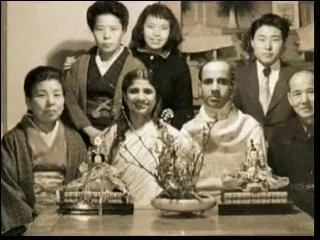
Miss Prakashmani speaks
"In those days everything was different," she said. "First, we always sat with a lot of attention in meditation. There was never any leaning against this or that. We had to be awake and alert" She sat upright and at attention, pulling herself away from the back of the mustard colored vinyl couch. "Not like this," she said, as she crossed her arms and leaned into the corner of the couch, gazing around. The class giggled knowingly. Dadi continued:
I remember Dadi Prakashmani telling us in the 80s and even in the 90s about the "early days". I remember very clearly sitting on the floor in the history hall while she was preparing to giving us our gift of either a 'rajai' (quilt)/ framed picture of Brahma Baba/ or sari. I always chose the rajai. She was just finishing arranging the gifts around her so she could show us the gifts, when someone asked what it was like in the early days. She put down the rajai, threw her hands in the air and looked up towards the sky. "Wah Baba!" Then she looked down at us and was so engaged. She really spoke to people with full attention and respect. "In those days everything was different," she said. "First, we always sat with a lot of attention in meditation. There was never any leaning against this or that. We had to be awake and alert" She sat upright and at attention, pulling herself away from the back of the mustard colored vinyl couch. "Not like this," she said, as she crossed her arms and leaned into the corner of the couch, gazing around. The class giggled knowingly. Dadi continued, "There was more love but less knowledge. Baba would tell us anything and we would just do it. No question about anything. Not even for a second." She crossed her legs and leaned into the class. We all leaned forward to listen. "Our understanding has changed a lot. Back then we thought Brahma Baba was God and that everything would finish quickly and we would all go together. Now our understanding has become refined. There is a lot of service still to do. We had to churn the butter. Now everything has been prepared for you. We didn't understand anything." Again she threw her hands up in the air with an expression of great love and abandon, smiling. Then she looked at us deeply and pointed to all of us in turn "Now you understand everything."
Here are some extracts of their understanding in the mid 1950s.
"Through this Divine Insight on this and several other occasions, God reveals to us many Godly secrets and scenes in advance including His many Godly forms... World God Father Himself with whom we have been maintaining constant communion since the last 17 years through His own Corporeal ordinary human forms in the names of World Almighty Goddess Mother Sri Jagadamba Saraswati and World Almighty God Father Brahma"
- Mr Anand Kishore
"We have visualized through Godly Insight the actual form of the Surpeme Soul, call God. It is very familiar and is commonly worshipped in temples in India and in most other countries. It is a most radiant, oval-shaped ball-like form of unbearable Light, called Jyotirlingum, visualized as Infinite Divine Light. The form is full of life. This is also called Shiva Lingum... His chief trinity forms as Brahma, the Creator, Vishnu, the Sustainer and Narayana, and Shiva the Destroyer, His bifurcated forms of Sri Lakshmi and Sri Narayana, the sovereigns of the ensuing Golden Age and the soul world, the subtle world, called Heaven in this corporeal world."
- Miss Prakashmani
It is apparent how their understanding refined over time. You can see they fully understand and appreciate the bright and awake living energy of God. The concept of omnipresence has disappeared, however the refined understanding of all souls having the form of points of light is not there yet. They understand the three worlds and the various activities of God, but they interpret the varied activities of God as meaning that God has a variety of forms. Current understanding is that the Supreme Soul has one form, the same as all souls, a point of radiant sentient light.

1950s discoveries!
Two nights ago in the New York Public Library, I sat there until closing, reading the transcripts of the 2nd, 3rd and 4th World Congress of Religions, held in Japan during 1954-55. This is a time period in the development of the Brahma Kumaris that we know little about. The documents shed real light on the development of their understanding and gives us a much more nuanced appreciation of how things refined over time.
These records (which will be transcribed into editable text and uploaded here along with photos of the original source) reveal the following:
Two nights ago in the New York Public Library, I sat there until closing, reading the transcripts of the 2nd, 3rd and 4th World Congress of Religions, held in Japan during 1954-55. This is a time period in the development of the Brahma Kumaris that we know little about. The documents shed real light on the development of their understanding and gives us a much more nuanced appreciation of how things refined over time.
These records (which will be transcribed into editable text and uploaded here along with photos of the original source) reveal the following:
- There is no mention of Shiva (outside the Shiv Shankar reference) and no indication yet of understanding Shiv Baba as God.
- They still use the term "God Brahma" but along with "God Vishnu" and "God Shiv Shankar". God Brahma is the corporeal of Incorporeal God and God Vishnu and God Shiv Shankar are the subtle of Incorporeal God.
- There is much more focus on the Trinity of God.
- God is omnipotent and omniscient, but no longer omnipresent. However His light and His presence are omnipresent in this corporeal world.
- God resides in the home of souls. This contrasts with the early understanding of Infinite Divine Light (which according to original photos continued through to 1952). They now understand the difference between the One who resides in the region of light, and the region of light itself.
- God is the mover of the Drama. "God is the transcendent power that gets the drama a-going" and "The efficient cause of all the phenomenal universe". Now understanding is that Drama moves everyone, including God (although some may still debate this).
- God has the shape of a Shiva Lingam. No mention yet of Jyoti Lingam (although they may not be a relevant distinction between Shiva Lingam and Jyoti Lingam). Absolutely no mention of Jyoti Bindu (point of light) which is the current understanding. Modern understanding is that all souls, all living beings, including the Supreme Soul, are the form of a tiny point.
- They still use the Gita as a frame of reference: "The significance of a religion based on one God is great but only if it is corroborated by the Gita"
- They believe the error in the Gita is that it contains the knowledge of Lord Brahma, not Lord Krishna (now the BKs understand it contains the knowledge of one Incorporeal God Shiva).
- "Brahma is the corporeal of Incorporeal God through the instrumentality of the sisters." There is no mention of Brahma being an instrument of God, or the medium for the Supreme Soul, but rather the incorporeal manifest in the corporeal. There is also a description of the Supreme Soul inhabiting the brain of an old man and using his mouth. This is the first indication we have that they may be starting to understand the existence of two distinct personalities. Yet understanding is still vague.
More is on the way.

Anthony Strano
Just as he made quiet dedicated and constant spiritual effort, he equally had within him a joyful innocence and spontaneity that would lighten my heart and brighten my mind.
Anthony was my first teacher and the one who introduced me to the practice of Raja Yoga meditation at the 'House of Raja Yoga' at Bondi Junction in 1984. He remained a true friend and spiritual brother. Below is a dedication I wrote to him, compiled with hundreds of others in a gift to his birth family.
It was through Anthony that I first heard the spiritual knowledge of Raja Yoga almost thirty years ago. His teachings inspired me to take the first step in what is now a life of deep and abiding spiritual practice. My brother Anthony was one of my closest companions on the path and a constant touchstone in my spiritual development. In the last few years, I truly felt I was in the company of an angel. Completely accessible and present, yet also beyond and light. After being in his company, I always felt renewed hope and infinite possibility through his deep faith and love for God. I also enjoyed easiness and laughter in his company. Just as he made quiet dedicated and constant spiritual effort, he equally had within him a joyful innocence and spontaneity that would lighten my heart and brighten my mind. Brother Anthony served with profound love, balance and dedication. His one and only reference point was the company of God and the spiritual teachings of that Divine One. This was obvious whenever I was in his company and allowed great honesty and comfort in the friendship I was fortunate to share with him. His passing has moved me to deepen my spiritual practice. May his memory be honoured through my life.
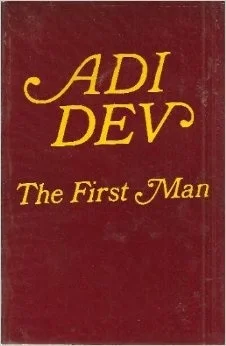
Adi Dev
Since its printing, Adi Dev has become a story of inspiration for many. The exciting and revolutionary tale of young girls and women against the forces of tradition and patriarchal hierarchy is one that continues to move many.
In Adi Dev Jagdish artfully weaves together two key elements for the reader: the old social history and the new spiritual knowledge that took almost 30 years to become clear. The dilemma with any historical account, particularly one that is so deeply romantic and mythical in its proportions and sense-making, is its 'accuracy'.
Respected Jagdish Chander Hassija (1929-1997) was a senior brother and one of the most prolific and articulate writers of the Brahma Kumaris World Spiritual University. Adi Dev was perhaps his most seminal work in terms of its influence and significance in the lives of many students of the Brahma Kumaris or "BKs". Written in the 1970s in the authors native Hindi and then later translated and printed in English, Adi Dev chronicles the story of the founder and the early community, along with providing the essence of knowledge that is now the foundation of all Brahma Kumaris work worldwide.
Since its printing, Adi Dev has become a story of inspiration for many. The exciting and revolutionary tale of young girls and women against the forces of tradition and patriarchal hierarchy is one that continues to move many.
In Adi Dev Jagdish artfully weaves together two key elements for the reader: the old social history and the new spiritual knowledge that took almost 30 years to become clear. The dilemma with any historical account, particularly one that is so deeply romantic and mythical in its proportions and sense-making, is its 'accuracy'.
In light of original documents re-discovered in 2007 by a couple of dedicated BKs, it became clear that some of the events, interpretations and even timeline given in Adi Dev was simplified and adjusted to create a much neater theological package, rather than the messy one that more rightly represents how the knowledge developed, and the way events occurred.
I am being intentionally careful with my language as all those who knew Jagdish, including myself, hold him in great esteem. I believe his intention was noble. Jagdish bhai wrote Adi Dev at a particular time and place in history, with a specific focus and intention: The Brahma Kumaris was expanding internationally and a concise historical account was required to provide an unseen global population an overview of BK spiritual philosophy, as well as an account of how it came to be. In the late 1970s, no thought was given to the possibility that - almost forty years later - original documents would show a complex, revolutionary series of narratives interlaced with instances of social rebellion in the context of thickly embedded politics and a convoluted legal system. One thing that is clear and true in Adi Dev is that the spiritual journey of and fierce independence of early members directly threatened thousands of years of culture, class, tradition and family.
The main pretext of Adi Dev is that the knowledge developed simply and quickly as a result of clear spiritual insights experienced by the founder, Dada Lekhraj (now known as Brahma Baba). This is in contrast to what we now understand: The knowledge came as a series of awakenings with little understanding to accompany them. Spiritual insights were reviewed, and sense-making occurred in light of the Bhagawad Gita, the key spiritual scriptures of that community. Furthermore, the knowledge was co-discovered. Dada would have insights that would then be fleshed out through the young girls' visionary trance experiences in meditation. At times girls would experience something in trance that they would tell Dada about. He would mull it over and try to make sense of it. It was a slow and steady for also convoluted and equivocal process of discovery, marked with a series of “aha” moments and great clarity. Certainly though, the spiritual knowledge was not an overnight discovery which is implied in the pages of Adi Dev. For example, the first spiritual experiences came as early as 1934. Yet, the understanding of the soul and Supreme Soul, and the yogic thought-based mind-heart union of souls with the Supreme Soul, was not understood until almost 30 years later. In Adi Dev it is postulated as being within a few years.
In the 1980s some of the senior sisters, such as Dadi Prakashmani (the Administrative Head of the Brahma Kumaris from 1969 until 2007) and Dadi Chandramani would talk about those early days and relate stories that confirm the above. However, somehow those stories somehow became lost in the passage of time: As the community expanded, classes became more general and the Dadis stopped relating such personal experiences of the early days.
Interestingly, it is only after most of the original members had passed that all of this "new understanding" came to light. The documents were discovered in May 2007 by which time Dadi Prakashmani, who could have responded with honesty and clarity as an authority on the history, as a beacon of integrity, was already unwell in hospital. Dadi passed away in August 2007. The documents were brought to the attention of seniors in October.
Adi Dev is a wonderful book that blends the spiritual knowledge of today, and integrates them with the experiences of yesterday. Adi Dev is a key text, however it is not an accurate account of what took place. It is an important historical account that tells of the key events, social conflict and deep spiritual experiences of the early members. However much of the knowledge was comprised to tell a somewhat neater and more palatable account that took place.