Please Note: Critical discussion, a variety of views and dialogue is encouraged. However, comments that are bullying and belittling in nature will be deleted. Regardless of your opinion or position regarding the Brahma Kumaris, please communicate with respect and kindness.

The Evolution of Knowledge is Now
When researching the Brahma Kumaris history, it becomes easy to think of the evolution of knowledge, as something that occurred in the remote past. Indeed the knowledge was in a state of great flux between 1932 and 1964. However, there have been further refinements since then.
When researching the Brahma Kumaris history, it becomes easy to think of the evolution of knowledge, as something that occurred in the remote past. Indeed the knowledge was in a state of great flux between 1932 and 1964. However, there have been further refinements since then.
For example, in the 1980s when many "double foreign" BKs were "born," there was a lot of focus on three stages of meditation: Brahma-Puri (the subtle form), Vishnu-Puri (the perfect form) and Shankar-Puri (the complete and bodiless form). This was a regular type of spiritual endeavour, and common discussion during classes. This has evolved and changed to the point where today meditation is a largely private and individually negotiated affair, although still conducted collectively. Sharing meditation experiences also used to be common practice after a Yoga Bhatti (period of extended meditation). This is far less frequent now. Instead, traditions from the past are pulled forward into new generations of spiritual practitioners who find new ways to bring meaning into their spiritual practice. A process of re-traditionalising perhaps?
There was a period in the late nineties through to around 2010 when there was a lot of focus on the Five Forms (Golden Age, Worship-Worthy, Brahmin, Angel, Point) and drills. These are less talked about now. Today, there is a more secular feel while BKs discuss "authenticity" and "community". Brahma-Puri, Vishnu-Puri and Shankar-Puri are now rarely talked about now. History continues to be made. The community continues to move. And knowledge continues to evolve.
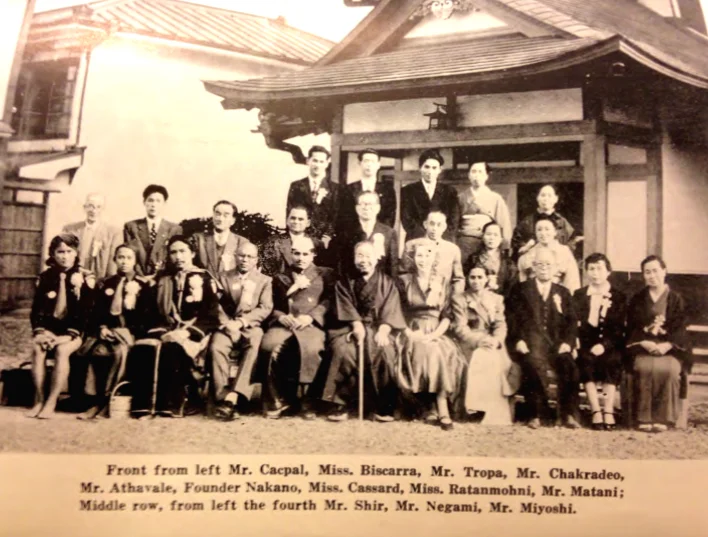
Transcriptions from 1954 'Second World Religious Congress' (Japan)
Transcriptions of the first speech given by the Om Mandli sisters at the 2nd World Religious Congress in Japan, 1954. Rich and illuminating! It really gives a feel of the time, their dedication and earnest good will to restore humanity to its most ideal state.
"God’s Dear Ones,
OM……… OM……..OM.
Before I take to the exposition of the views of my Order on topics included in the Agenda, let us all first establish ourselves in perfect silence for a short while. For, originally, we were all-silent. In that state, we experienced supreme peace and bliss. Let us, therefore, all be calm for sometime. I mean, let us become our real selves and thus regain that lost realm of tranquility which is our Godly patrimonial right, for, our Father Almighty, you know, is all-calm."
Above is an extract from the first speech given by Miss Prakashmani and Miss Rattan Mohini in Japan 1954 at the Second World Religious Congress. They would participate in two more through 1954 and 1955. It is fascinating reading and shows a period of the development of BK understanding previously unclear. Their understanding in the 1950s was distinct to their earlier understanding of the 1930s and 1940s as well as not yet being the fully formed body of knowledge that exists today on the post-1969 BK path.
Apologies for taking a while to get this together and publish the documents. I've finally started transcribing to render it printable as well as searchable (mainly the former). I will post up links to the original documents as well, but for now here is the first of what will be around five or six speeches and messages of the time. The beautiful words of Dadi Prakashmani and Dadi Ratan Mohini (probably authored or at least translated by our wonderful Dada Anand Kishore).
Enjoy!

1950s discoveries!
Two nights ago in the New York Public Library, I sat there until closing, reading the transcripts of the 2nd, 3rd and 4th World Congress of Religions, held in Japan during 1954-55. This is a time period in the development of the Brahma Kumaris that we know little about. The documents shed real light on the development of their understanding and gives us a much more nuanced appreciation of how things refined over time.
These records (which will be transcribed into editable text and uploaded here along with photos of the original source) reveal the following:
Two nights ago in the New York Public Library, I sat there until closing, reading the transcripts of the 2nd, 3rd and 4th World Congress of Religions, held in Japan during 1954-55. This is a time period in the development of the Brahma Kumaris that we know little about. The documents shed real light on the development of their understanding and gives us a much more nuanced appreciation of how things refined over time.
These records (which will be transcribed into editable text and uploaded here along with photos of the original source) reveal the following:
- There is no mention of Shiva (outside the Shiv Shankar reference) and no indication yet of understanding Shiv Baba as God.
- They still use the term "God Brahma" but along with "God Vishnu" and "God Shiv Shankar". God Brahma is the corporeal of Incorporeal God and God Vishnu and God Shiv Shankar are the subtle of Incorporeal God.
- There is much more focus on the Trinity of God.
- God is omnipotent and omniscient, but no longer omnipresent. However His light and His presence are omnipresent in this corporeal world.
- God resides in the home of souls. This contrasts with the early understanding of Infinite Divine Light (which according to original photos continued through to 1952). They now understand the difference between the One who resides in the region of light, and the region of light itself.
- God is the mover of the Drama. "God is the transcendent power that gets the drama a-going" and "The efficient cause of all the phenomenal universe". Now understanding is that Drama moves everyone, including God (although some may still debate this).
- God has the shape of a Shiva Lingam. No mention yet of Jyoti Lingam (although they may not be a relevant distinction between Shiva Lingam and Jyoti Lingam). Absolutely no mention of Jyoti Bindu (point of light) which is the current understanding. Modern understanding is that all souls, all living beings, including the Supreme Soul, are the form of a tiny point.
- They still use the Gita as a frame of reference: "The significance of a religion based on one God is great but only if it is corroborated by the Gita"
- They believe the error in the Gita is that it contains the knowledge of Lord Brahma, not Lord Krishna (now the BKs understand it contains the knowledge of one Incorporeal God Shiva).
- "Brahma is the corporeal of Incorporeal God through the instrumentality of the sisters." There is no mention of Brahma being an instrument of God, or the medium for the Supreme Soul, but rather the incorporeal manifest in the corporeal. There is also a description of the Supreme Soul inhabiting the brain of an old man and using his mouth. This is the first indication we have that they may be starting to understand the existence of two distinct personalities. Yet understanding is still vague.
More is on the way.

Predictions and Theology
There has been some discussion within the Brahma Kumaris about 'predictions' in the teachings and whether a date for a cataclysmic world change was ever explicitly given, implied or even insinuated.
Predictions
There has been some discussion within the Brahma Kumaris about 'predictions' in the teachings and whether a date for a cataclysmic world change was ever explicitly given, implied or even insinuated.
Anthony Strano, one of the most senior teachers in the west, and held in particularly high regard as a someone who practiced the teachings at the deepest level, had this to say about dates mentioned in the BK scripture:
"Time is contrived by 'man' (sic) to make sense out of the world. Similarly God uses the instruments of human creation to bring meaning to His (sic) teachings. But it's really not about dates. It never has been. It's about whatever you want to do, do it now."
Often, with scriptural texts, a sense of spiritual urgency is measured against world events producing predictions that - frequently - 'fail' to come to pass. This is often the case with Millenarian New Religious Movements as well as older more established religions. This doesn't have to mean that the teachings themselves have failed, but rather it may require some revised thinking around the 'absoluteness' of scriptural text. In this case, it is worth considering hermeneutics, or the language of analysis and interpretation of scripture. Hermeneutics dates back to the Jewish Oral Tradition but since the time of Aristotle (Risser 1997) it has been a method of engaging critically with scriptural text and acknowledging the fluid nature of scriptural interpretation.
“God has not revealed his theology all at once. Rather, God has revealed Brahma Kumaris theology gradually and in response to his assessment of the Brahma Kumaris’ needs and ability to understand. Their theology is not sealed and their canon is not closed. It grows continually as God explains and elaborates on it. Tomorrow, God may personally resolve any contradictions that appear today.”
Theology
Within the Brahma Kumaris theology, some murlis have been revised over the years, to remove predicted dates of 'vinash' or catastrophic world change that have not yet come to pass. See here for an example from 21.01.1969 three days after Brahma Baba passed away. The original and the revised versions are included, with the relevant text outlined in red. More examples of predictive statements in murlis are available below. Note that some have links to original documents, whereas others have yet to be verified.
As stated in Musselwhite's doctoral dissertation on the Brahma Kumaris, "God’s teachings regarding the end of the Diamond Age have not been entirely consistent. The most senior member I heard speak on the subject suggested that the Diamond Age will last either 100 or 250 years." (Page 5).
Adi Dev
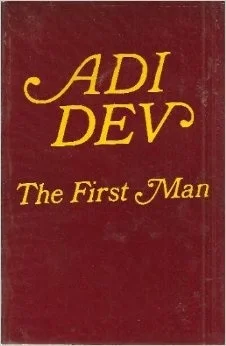
Since its printing, Adi Dev has become a story of inspiration for many. The exciting and revolutionary tale of young girls and women against the forces of tradition and patriarchal hierarchy is one that continues to move many.
In Adi Dev Jagdish artfully weaves together two key elements for the reader: the old social history and the new spiritual knowledge that took almost 30 years to become clear. The dilemma with any historical account, particularly one that is so deeply romantic and mythical in its proportions and sense-making, is its 'accuracy'.
Respected Jagdish Chander Hassija (1929-1997) was a senior brother and one of the most prolific and articulate writers of the Brahma Kumaris World Spiritual University. Adi Dev was perhaps his most seminal work in terms of its influence and significance in the lives of many students of the Brahma Kumaris or "BKs". Written in the 1970s in the authors native Hindi and then later translated and printed in English, Adi Dev chronicles the story of the founder and the early community, along with providing the essence of knowledge that is now the foundation of all Brahma Kumaris work worldwide.
Since its printing, Adi Dev has become a story of inspiration for many. The exciting and revolutionary tale of young girls and women against the forces of tradition and patriarchal hierarchy is one that continues to move many.
In Adi Dev Jagdish artfully weaves together two key elements for the reader: the old social history and the new spiritual knowledge that took almost 30 years to become clear. The dilemma with any historical account, particularly one that is so deeply romantic and mythical in its proportions and sense-making, is its 'accuracy'.
In light of original documents re-discovered in 2007 by a couple of dedicated BKs, it became clear that some of the events, interpretations and even timeline given in Adi Dev was simplified and adjusted to create a much neater theological package, rather than the messy one that more rightly represents how the knowledge developed, and the way events occurred.
I am being intentionally careful with my language as all those who knew Jagdish, including myself, hold him in great esteem. I believe his intention was noble. Jagdish bhai wrote Adi Dev at a particular time and place in history, with a specific focus and intention: The Brahma Kumaris was expanding internationally and a concise historical account was required to provide an unseen global population an overview of BK spiritual philosophy, as well as an account of how it came to be. In the late 1970s, no thought was given to the possibility that - almost forty years later - original documents would show a complex, revolutionary series of narratives interlaced with instances of social rebellion in the context of thickly embedded politics and a convoluted legal system. One thing that is clear and true in Adi Dev is that the spiritual journey of and fierce independence of early members directly threatened thousands of years of culture, class, tradition and family.
The main pretext of Adi Dev is that the knowledge developed simply and quickly as a result of clear spiritual insights experienced by the founder, Dada Lekhraj (now known as Brahma Baba). This is in contrast to what we now understand: The knowledge came as a series of awakenings with little understanding to accompany them. Spiritual insights were reviewed, and sense-making occurred in light of the Bhagawad Gita, the key spiritual scriptures of that community. Furthermore, the knowledge was co-discovered. Dada would have insights that would then be fleshed out through the young girls' visionary trance experiences in meditation. At times girls would experience something in trance that they would tell Dada about. He would mull it over and try to make sense of it. It was a slow and steady for also convoluted and equivocal process of discovery, marked with a series of “aha” moments and great clarity. Certainly though, the spiritual knowledge was not an overnight discovery which is implied in the pages of Adi Dev. For example, the first spiritual experiences came as early as 1934. Yet, the understanding of the soul and Supreme Soul, and the yogic thought-based mind-heart union of souls with the Supreme Soul, was not understood until almost 30 years later. In Adi Dev it is postulated as being within a few years.
In the 1980s some of the senior sisters, such as Dadi Prakashmani (the Administrative Head of the Brahma Kumaris from 1969 until 2007) and Dadi Chandramani would talk about those early days and relate stories that confirm the above. However, somehow those stories somehow became lost in the passage of time: As the community expanded, classes became more general and the Dadis stopped relating such personal experiences of the early days.
Interestingly, it is only after most of the original members had passed that all of this "new understanding" came to light. The documents were discovered in May 2007 by which time Dadi Prakashmani, who could have responded with honesty and clarity as an authority on the history, as a beacon of integrity, was already unwell in hospital. Dadi passed away in August 2007. The documents were brought to the attention of seniors in October.
Adi Dev is a wonderful book that blends the spiritual knowledge of today, and integrates them with the experiences of yesterday. Adi Dev is a key text, however it is not an accurate account of what took place. It is an important historical account that tells of the key events, social conflict and deep spiritual experiences of the early members. However much of the knowledge was comprised to tell a somewhat neater and more palatable account that took place.